Where You'll Hunt: The Mountains, the Plains, and the Rivers.
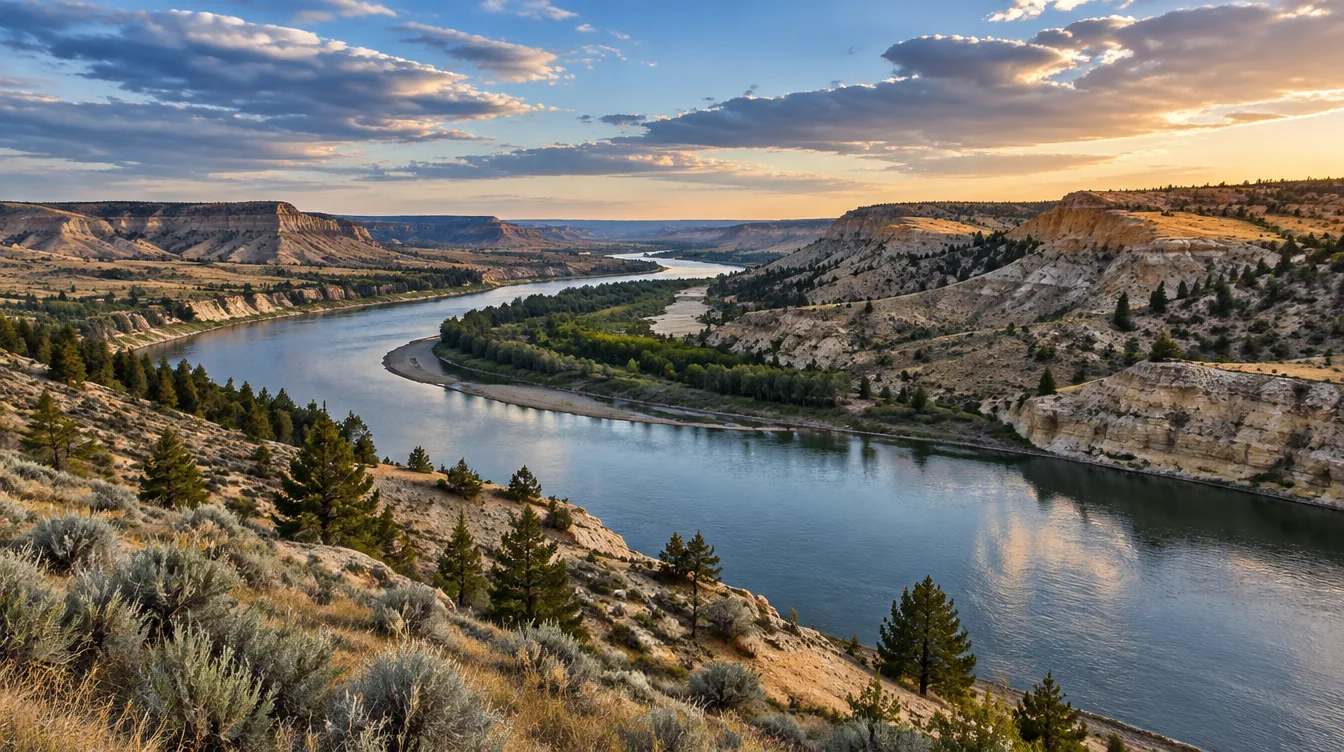
There is no wrong place to start in Montana. There is only the country that sounds right to you.
Most beginners think they need to learn where the good spots are. You do not. Montana is enormous, and nearly a third of it is public land — land you can walk on. The state is not a puzzle you have to solve before you go. It is a place you get to see.
So instead of unit numbers and boundaries, here is what Montana actually feels like. Read these and notice which one pulls at you. Still choosing the animal itself? Which Animal Should You Hunt First? walks through the options.
The mountains
The western half of Montana is mostly forest. Dark timber climbs the slopes, and the peaks open up above the treeline. This is the country people picture when they picture Montana.
Elk live here. So do deer, black bear, and mountain lion. In the fall, the bulls call through the timber in the early dark, and that sound is the reason a lot of people end up hunting for the rest of their lives.
A mountain hunt is physical. You walk, you climb, you sit and listen. The air is cold and smells like pine. If you are new and reasonably healthy, a guide will set a pace that works for you.
This is the classic big-sky Montana hunt. It is also the one that makes you earn it.
The plains and breaks
Drive east and the trees thin out until they are gone. The land opens into grassland and long horizons, and the sky takes up most of the world.
Antelope live out here on the open prairie. Deer are here too, and so are pheasants and sharp-tailed grouse. The country is broken in places by coulees (steep little valleys) and river canyons — the breaks — where the animals hide from the wind.
You can see for miles. A hunt here is often about glassing: sitting still, scanning the country through binoculars, then making a plan. It suits people who would rather look than climb.
The east is quieter, emptier, and bigger than the mountains in its own way. Some people never want to hunt anywhere else.
The river bottoms
Cutting through all of it are river valleys, and along those valleys grow cottonwood trees. These bottoms are their own little world — shaded, thick, and full of cover.
White-tailed deer love this country. They hide in the brush and move along the water. It is also where a lot of the birds live: pheasants, ducks, and geese.
River-bottom hunting is often more gentle underfoot. The land is flatter, and the walking is easier than in the mountains. For a first hunt, that matters more than people admit.
The famous trout rivers
You can hunt Montana and never touch a rifle. The same wild country holds some of the best trout water in the country.
The Madison. The Big Hole. The Blackfoot. The Bighorn. The Yellowstone. The upper Missouri. These are the rivers Montana is famous for, and a fly rod is the other way to stand in this landscape.
This is worth knowing even if you plan to hunt. Many guided trips pair the two. You hunt in the morning and fish in the afternoon, or you bring a partner who would rather fish than hunt. The outfitters who work these rivers know them the way a guide knows a mountain.
Standing in a cold river at first light, with the mountains behind you, is the same feeling as the timber at dawn. It is the same place. Only the tool changes.
Whose land is it?
Montana is a patchwork, and a guided hunt can happen on different kinds of ground. Which one you are on is a fair question to ask.
A lot of guided hunting runs on private ranch land — working ground the outfitter has leased or been given permission to hunt. Private ground is often managed for wildlife, so it can hold more animals and far fewer hunters. That calm is part of what you are paying for.
Some hunts run on public land — national forest, BLM ground, and state land. Nearly a third of Montana is public, and most of it is open to hunt with the right license. Our guide to public land and access explains the difference.
And some runs on ground opened through Block Management, a state program that pays private landowners to let the public hunt their land for free. It is how a lot of do-it-yourself hunters get onto private ground.
You do not have to sort any of this out yourself. Your outfitter knows exactly whose ground you will be on, and how it is managed. Ask, and they will tell you.
You do not have to choose from a map
Here is the reassuring part. You do not need to know what any of this is called.
You do not need to know that Montana has seven regions, or where one ends and another begins. You do not need a single number. That is the outfitter's job, and they have been doing it for years.
Your job is only this: tell someone what kind of country sounds right. Do you want dark timber and elk calling? Open prairie and long views? A quiet river bottom? A river you can fish?
A licensed Montana outfitter listens to that and puts you in the right place. They know the land, the animals, and the season. They will tell you honestly what fits a first-timer and what does not.
You bring the curiosity. They bring the map.