Block Management Areas, Explained: How to Hunt Private Land for Free in Montana
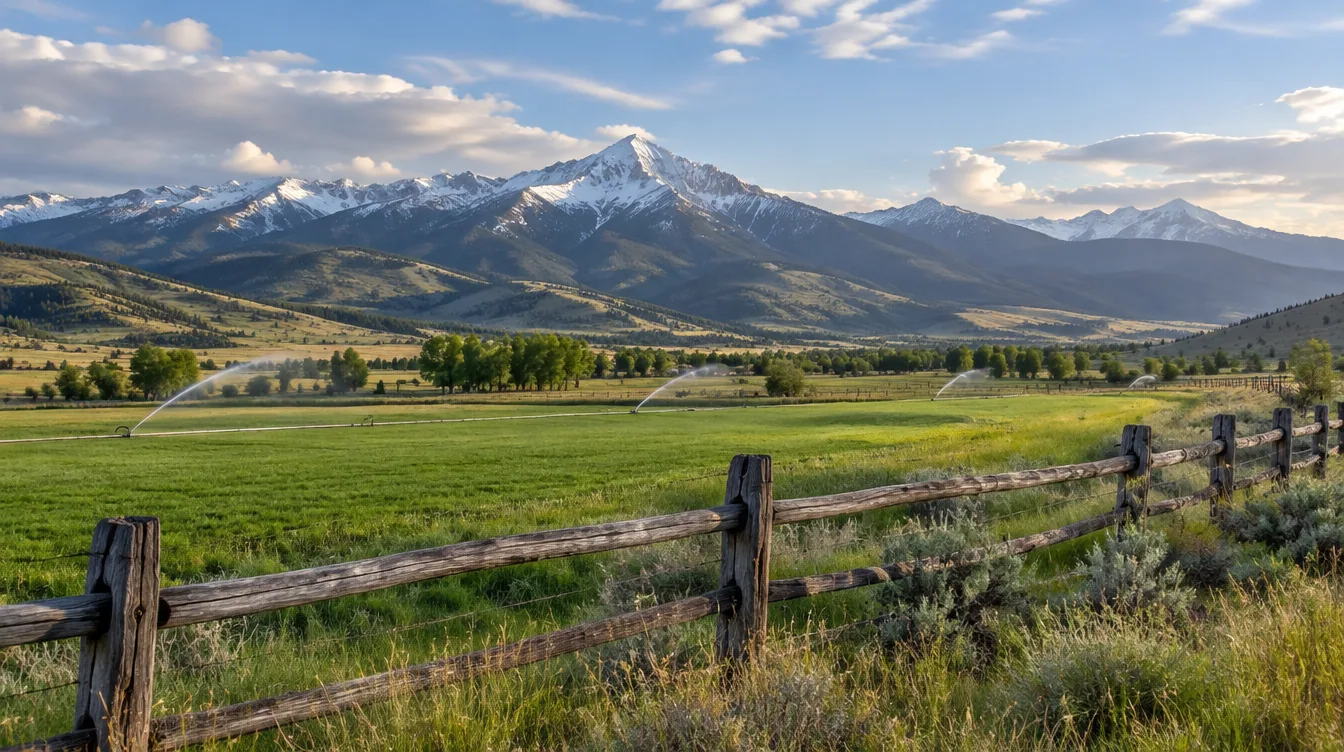
You can stare at a Montana map for an hour and come away with a badly wrong idea about the state. The green and the tan run to the horizon, and the roads thin to almost nothing. The whole thing reads like one enormous public playground until the day you actually drive it. That is when the promise turns into fence line after fence line and a ranch sign every half mile. There is no obvious way for a stranger in a rented truck to hunt a single acre of it.
The numbers explain the feeling, and they are worth sitting with for a second. Montana holds more than 30 million acres of state and federal land — nearly one third of the state (FWP Hunter Access). One third. The rest is mostly private, and on private ground you need the landowner's permission whether the ground is posted or not (FWP Hunter Access FAQ). A missing sign does not mean a missing rule, because the law still asks you to knock before you cross.
So how does a hunter with no family ranch, no lease, and no local phone number find a gate that actually opens?
For a lot of people, the answer turns out to be a program they have heard named a dozen times and never once used. Block Management. It is the single largest door into Montana's private ground, it costs you nothing but manners, and most of the hunters who need it most are not using it at all.
The quick facts
| What it is | A voluntary FWP program that pays private landowners to allow free public hunting access |
| What it costs you | Nothing. Free to hunt. |
| 2026 scale | Roughly 1,200 cooperators and about 6.8 million acres |
| 2025 scale | 1,326 cooperators, 6.81 million acres, $12.5 million paid to landowners |
| Where you find it | FWP's Hunter Access Guide, published by August 15 each year |
| Best for | Deer, elk, antelope, and upland birds — plus reaching public land you could not otherwise get to |
What Block Management actually is
Block Management is a deal the state strikes with private landowners. FWP pays a rancher or a farmer to open their ground to public hunting (FWP Block Management). In exchange, the landowner works with the agency to set the rules for how hunters use that ground. In 2025 the program paid out $12.5 million to landowners across 1,326 cooperators, covering 6.81 million acres of Montana (FWP Block Management).
Read that arrangement plainly, because the details matter more than the headline. The land stays private. The landowner keeps it, works it, and decides whether to stay in the program every single year. All the state ever buys is your right to walk onto it under conditions.
Those conditions are the whole game, and they change from one property to the next. Some Block Management Areas ask you to sign in at a box by the gate, and some ask you to call ahead and get permission before you leave the house. Some allow vehicles on certain roads and close everything else, while others are strictly walk-in. It is rare for two of them to be identical, so you learn each one fresh.
This is not a technicality you can skip past. It is the reason a hunter who shows up unprepared gets turned around at the first gate and then blames the program instead of the preparation.
The scale, and why the number moves
If you looked up Block Management last season, you saw 1,326 cooperators and 6.81 million acres. For the 2026 season, the program runs at roughly 1,200 cooperators and about 6.8 million acres. That is a small step down in properties, and it is worth understanding why the total shifts the way it does.
Landowners enroll voluntarily, and they drop out just as voluntarily. A wet spring, an illness in the family, a rough experience with one hunter, or a better offer on the hay can all close a gate before the season opens. The acreage stays roughly stable from one year to the next, but the roster underneath it moves around, which is exactly why you never hunt off last season's list. FWP publishes a fresh Hunter Access Guide by August 15 every year, printing the current cooperators, their boundaries, and their rules (FWP Block Management). That guide is the only version worth carrying, and memory is not a substitute for it.
If you are still learning how the state divides itself up, the guide makes far more sense once you know how to read a hunting district. Those numbers are regional code rather than trivia.
How to actually use a BMA
Here is the sequence that works, in the order it should be done.
Start with the guide, not the map. Open FWP's Hunter Access Guide and find the counties you plan to hunt, because every BMA is listed there with its type and its access rules. Bookmark the ones that allow the kind of hunting you are actually doing.
Learn whether it is sign-in or permission. These two categories behave very differently, and confusing them ends your morning early. On a sign-in area, you fill out the card or the register and go. On a permission area, you contact the landowner or the designated contact first and get a yes before you drive out. Some properties use a phone or an online check-in instead.
Read the posted rules at the gate. The guide gives you the summary, and the sign at the property gives you the specifics. Where you can park, whether you can drive, whether you can bring a partner, and where the boundary runs are all spelled out there.
Sign in honestly. Your name and your vehicle matter more than they look. They are how the landowner knows who is on the ground, and they are part of what keeps the insurance and the goodwill intact.
Hunt the rules, not just the ground. If a BMA is walk-in only, you walk in. If it closes at dark, you are out at dark with time to spare. A rule you bend is a rule that can cost the next hunter the entire property.
Do all of that, and a program holding 6.8 million acres stops being a mystery and starts being a plan you can repeat every fall.
Sign-in areas, Open Fields, and one correction
Hunters coming from Wyoming or Colorado tend to arrive with a phrase already loaded, and they ask where Montana's Walk-In areas are.
Montana does not have a program branded "Walk-In" the way those states do (FWP Hunter Access). It is a real and common mix-up, and it wastes time if you do not know it going in. The walk-in work in Montana runs through two different channels instead.
The first is BMA sign-in areas, which are the same Block Management program set up so you can register and hunt without a separate permission call. The second is the Upland Game Bird Enhancement Program's "Open Fields" walk-in bird hunting (FWP Hunter Access). If pheasant is the real reason you are out there, Open Fields is the name you are looking for, and it is worth reading alongside our pheasant guide before you set a date.
One timing detail matters for anyone crossing a state line. Nonresident upland hunters on public or access-program land start 10 days later than residents, with the single exception of mountain grouse (FWP Upland Game Bird). Build that gap into your arrival, or you will spend opening week watching residents work the grass.
What Block Management opens up
The obvious benefit is private ground, but the less obvious one may matter more to a public-lands hunter. USFS national forests cover about 16 million acres, BLM holds roughly 8.3 million acres, and state school trust land runs to about 5.5 million acres across the map (FWP Hunter Access). A meaningful share of that public ground sits behind private property with no legal way in, which hunters call landlocked and which is one of the most frustrating facts of hunting the West.
Block Management areas often sit between a public road and those trapped acres. A property enrolled in the program can become your corridor, which means legal access across private ground to public ground you could not otherwise touch. That is what the term Unlocking Public Lands describes, and it is why a BMA is sometimes worth far more than the private acres it actually covers.
Two details catch people who are new to this. State school trust land is public, but hunting it requires a Conservation License — $8 for residents and $10 for nonresidents (FWP Resident Fees) — so it is not free ground in the same sense the national forest is. And whatever any sign says, the private-land rule never bends: every hunter must have landowner permission on private property regardless of whether it is posted (FWP Hunter Access FAQ). A BMA grants you that permission in advance inside its boundaries, and the moment you step off the corner of the property, you are on your own again.
The eastern regions hold much of the best of this country, which is why the BMA maps for Region 6, the northeast and Region 7, the southeast fill a hunter's notebook so quickly.
The honest picture
Here is where I stop selling and start telling the truth about the arrangement.
A Block Management Area is not public land. It is private land that has agreed to host you for a season. That distinction lives in every rule the landowner sets, and in the fact that the whole arrangement renews one year at a time. Treat a BMA like a public park you are entitled to, and you become the very reason the next property leaves the program.
The rules are the price of entry, and the price is remarkably low. Sign in, keep your truck where they say, leave the gate as you found it, and carry your trash out. None of those are favors you are doing for a landowner. They are the terms of a deal worth $12.5 million a year in landowner payments. Any single one of them can be revoked by a property owner who decides the hassle is no longer worth the money.
Disrespect one property and you cost everyone the ground. This is the part that does not get said often enough, and it deserves to be repeated. When a BMA pulls out, the access does not relocate somewhere convenient and no other program quietly picks up the slack. The acres simply close to the public. Every cooperative landowner who has ever grown tired of litter, torn fences, or hunters who ignored the sign was a landowner close to staying in.
This access is a privilege with a renewal date attached. FWP re-ups its agreements year by year, and landowners re-up their patience at the same time. Both supplies are limited, which means you should plan your season as though the ground depends on your manners, because for the hunters coming after you it does.
The people who get the most out of Block Management treat a BMA gate like a handshake from someone who did not have to offer it in the first place.
FAQ
Is Block Management open to nonresidents? Yes, and it is worth saying plainly. Block Management access is free and open to the public, residents and nonresidents alike, and the program does not reserve ground for locals. Your hunting license is a separate matter, and if you are coming from out of state the tag side is its own project, so start with our nonresident license costs breakdown. Just remember that nonresident upland hunters on access-program land start 10 days later than residents, and build those dates accordingly.
Do I have to sign in on a Block Management Area? It depends entirely on the property, because some BMAs are sign-in areas where you register at the gate and then hunt, while others require permission first through the landowner or the listed contact. The Hunter Access Guide tells you which type each property is, and the sign at the gate repeats it, so never assume you can skip the step.
Are Block Management Areas the same as walk-in hunting? Not exactly, and the wording trips up a lot of people. Montana has no program branded "Walk-In" the way Wyoming and Colorado do, so a search for that term will point you in the wrong direction. The closest equivalents in Montana are Block Management sign-in areas and the Upland Game Bird Enhancement Program's "Open Fields" walk-in bird hunting (FWP Hunter Access).
How much does it cost to hunt a BMA? Access itself costs nothing, but you still need your licenses in order. That means a Conservation License at $8 resident and $10 nonresident, plus a Base Hunting License at $10 resident and $50 nonresident, along with whatever tags you happen to be carrying (FWP Resident Fees). If a BMA includes state school trust land, that Conservation License is exactly what lets you hunt it legally.
Can I drive off the road or camp on a BMA? You can do whatever the landowner allows and nothing beyond it. Some properties permit vehicles on designated roads and close everything else, some are walk-in only, and camping is frequently restricted or banned outright. Read the guide entry first, then read the gate sign, and follow whichever of the two is stricter. When you are in doubt, park at the boundary and use your legs.
Where to go next
The only list that matters is the current one, and it is free. FWP's Hunter Access Guide comes out by August 15 each year, and that single document is the difference between hunting private Montana and driving straight past it.
Start with our Public-Access Finder to sort the state by the ground you can actually reach, from Block Management and state school trust to national forest and everything between. Then pull the counties you are serious about and build your whole season from there.
The door is open, and it has been open a long time. It simply asks you to read the sign and shut it behind you.
One more thing before you go, because the program moves every year. FWP reassigns Block Management acreage and cooperators each season, so treat any number as a snapshot. Our Draw Odds & Deadline Calendar keeps the whole season's dates — and the current access scale — in one place.