Montana Pheasant Hunting on Public Land
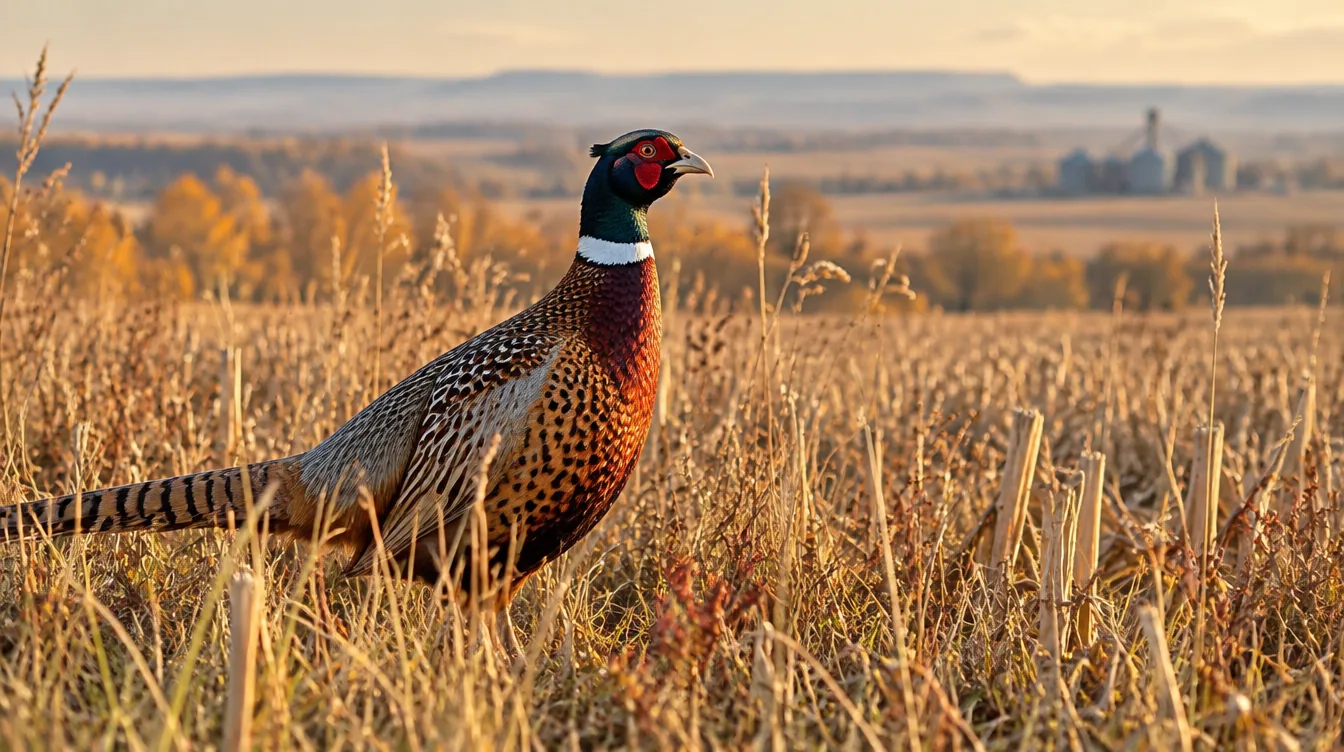
You saw a rooster flush off the edge of a cut cornfield last fall. It was close enough to hear the wings beat, and the field belonged to somebody. Now you are standing at the truck with a dog, a shotgun, two free days, and no idea where a person with no local name is allowed to walk. That is the pheasant problem in Montana, and it is not the problem most pages admit to. The birds are rarely the shortage. Ground you can legally hunt them on is.
Montana is not Kansas, and it is not South Dakota. It does not plant the eastern half of the state in CRP. It does not run a pheasant economy with a motel on every corner. What it has is agricultural country strung along its river bottoms and a working access system that opens some of that ground to anyone. It also has a set of rules that trips up out-of-state hunters before they ever chamber a shell. This page is about the ground rather than the gear, which is the only part that changes your odds. If you can get onto birds legally, the rest is dog work and walking.
The quick facts (Montana pheasant, 2026)
Every figure below carries its year, because FWP resets the seasons each cycle. Confirm each one against the current regulations before you plan the trip.
| Pheasant season | Oct 10 – Jan 1 (2026 season) |
| License | Upland game bird licenses are sold over the counter |
| Nonresident timing | On public or access-program land, nonresidents start 10 days later than residents — mountain grouse excepted |
| Best country | Eastern Montana agricultural land and river bottoms — Regions 6 and 7, including the Milk and Yellowstone bottoms |
| Public-access doors | Wildlife Management Areas, Fishing Access Sites (some allow hunting), Block Management Areas, and the Upland Game Bird Enhancement Program's "Open Fields" |
| Stocked birds | FWP's "Roosters for Recruitment" releases roughly 12,000 pheasants a fall on WMAs, FASs, and some school trust lands |
| The catch | Most pheasant ground is private, and permission is required whether or not it is posted |
Two things on that card deserve a plain sentence each. First, upland licenses are over the counter, so there is no draw standing between you and a pheasant season. That is the good news, and it is genuinely good. Second, that sentence about nonresidents is the one that quietly costs people their opening weekend. On public land, or land enrolled in an access program, a nonresident cannot start on opening day the way a resident can. The gap is ten days, and it applies to the ground you can actually hunt. Mountain grouse are the one upland exception, and pheasants are not.
Every hunter also needs a Conservation License at $8 for residents and $10 for nonresidents. The Base Hunting License adds $10 for residents and $50 for nonresidents. A nonresident Combination license, if that is the route you took for deer or elk, already includes upland game birds except turkey. Our guide to nonresident license costs lays out the whole stack if you are trying to see the total.
Where Montana keeps its pheasants
Pheasants are a farm-country bird, and in Montana that means the east. You want grain and the weedy margins around it. You want the cattail sloughs and brushy draws that give a bird somewhere to sit when the weather turns. FWP describes white-tailed deer as densest in the eastern river valleys, naming the Milk River, and pheasants ride the same country for the same reasons. Water, cover, and food sit together in a narrow band along a bottom, and that band is where a pheasant lives its whole life.
That puts the weight of the hunting in two regions. Region 6, the northeast, out of Glasgow carries the Milk River country and a wide spread of dryland agriculture around it. Region 7, the southeast, out of Miles City covers the Powder River country and the Yellowstone drainage below Billings. Both hold the mix a pheasant needs — cropland for feed, bottomland for cover — and both hold far more private ground than public.
Understand the shape of that before you drive. A pheasant bottom is not a mountain range with national forest running through the middle of it. It is a strip of private farmland, and the public pieces inside it are islands rather than a sea. You do not hunt eastern Montana by finding a place to start walking and going until you are tired. You hunt it by knowing which islands exist, driving between them, and giving each one an honest hour.
The four doors onto pheasant ground
Here is the part that answers the actual question, the one about where a stranger can legally walk. Montana has four practical doors onto upland ground, and they work differently from each other.
Wildlife Management Areas. These are FWP-owned tracts managed for wildlife and open to public hunting. They are the closest thing to a guaranteed legal walk in the state. That is where a hunter with no local contacts should start.
Fishing Access Sites. FWP owns these too, and they exist mainly for anglers. Many of them allow hunting with restrictions, which is a genuine bonus for a bird hunter working a river bottom in October. Some do not, so read the specific site's rules rather than assuming.
Block Management Areas. This is the program most out-of-state hunters have heard of and least understand. It is voluntary private-land access, arranged with cooperating landowners, opening enrolled ground to public hunting at no charge. In 2025 the program enrolled 1,326 cooperators across 6.81 million acres and paid $12.5 million for it. Those figures move every year, so check the current season's number rather than trusting one from a forum. FWP publishes its Hunter Access Guide by Aug 15, and it is worth reading before you drive anywhere. Our explainer on Block Management covers how sign-in and boundaries work once you are standing on one.
"Open Fields." This is the walk-in bird hunting piece of the Upland Game Bird Enhancement Program. It is the closest thing Montana has to a dedicated pheasant-access program, and it enrolls private ground specifically for upland bird hunting.
The Public-Access Finder exists to sort all four of these by the ground you can actually reach. That beats trying to hold four programs and seven regions in your head while planning from another state.
The one rule that has no exception sits underneath all of it. On private land, every hunter must have landowner permission, whether or not the property is posted. Montana holds a great deal of private ground, and that is precisely why the access programs exist. If you do not have permission and you are not on a public tract or an enrolled parcel, you are not hunting. You are trespassing.
It is also worth skipping one mistake before you make it. Montana has no program branded "Walk-In," the way Wyoming and Colorado do. Hunters who move here from those states ask for the walk-in atlas and get a blank look. The name does not exist in Montana's system; what exists is what is on this list. If someone tells you to look up the Montana Walk-In, they are describing a program that is not there. The ground they mean is probably Block Management or Open Fields.
Roughly 12,000 birds, and what that does and does not mean
FWP runs a pheasant stocking effort called "Roosters for Recruitment." Each fall it releases roughly 12,000 pheasants across Wildlife Management Areas, Fishing Access Sites, and some school trust lands. The aim is not to prop up the population so much as to put birds where hunters can find them. It also gives the release sites a recruitment bump.
For a visiting hunter, this is useful and it is also easy to misread. Useful, because it tells you which categories of ground carry birds by design rather than by accident, and that is a real planning signal. Easy to misread, because 12,000 birds spread over WMAs and access sites across a state the size of Montana is a supplement, not a guarantee. It does not mean every WMA has a pheasant behind every fence post on opening morning. It means the stocked sites are a reasonable place to begin. Beginning somewhere beats driving the back roads hoping to spot a bird from the cab.
The other upland birds, and one correction
Pheasants are one bird in a bigger upland picture, and if your trip is already paid for you may as well know what else shares the season. Mountain grouse, sharp-tailed grouse, and Hungarian partridge all run Sep 1 – Jan 1 in 2026. Sage grouse run a short Sep 1 – 30 window, so if that bird is on your list, it is a September errand rather than a fall one. All of them sit behind the same over-the-counter upland license. That is why a fall trip can hold more than one kind of hunting.
The correction is worth restating because it wastes people's time every season. Montana has no program branded "Walk-In." The walk-in equivalents here are the sign-in Block Management areas and the Upland Game Bird Enhancement Program's "Open Fields." Our upland birds hub carries the species pages and the season detail for the rest of them.
The honest picture
Now the part that matters more than any list above, because your job is to spend vacation days wisely and ours is to tell you where the odds are real.
Most pheasant ground in Montana is private, and the public pieces are small. That is the single fact that shapes every pheasant trip in this state. If you are picturing a Kansas-style afternoon where you park and walk a section and a half, recalibrate. You are hunting islands, and a lot of your day goes into the windshield.
Permission is real work, and it may not pay. Knocking on farmhouse doors still works in Montana, and plenty of landowners still say yes to a polite stranger with a well-behaved dog. It also takes time, it takes rejection, and it works best when you are there in person rather than calling from six states away in July. If you have two days and no contacts, put your energy into Block Management and the stocked public sites instead of cold-knocking, and let the math favor the program ground.
Do not expect a bird behind every fence post. Even the stocked sites are not pens. Some days you walk good cover and nothing gets up, and that is a normal outcome rather than a sign you chose wrong.
Plan for the ten-day gap if you are a nonresident. If your whole trip is a long weekend built around opening day, the public-land start date will eat it. Either come later in the season, or accept that your first days on public ground come after the residents have had their turn. That is not a flaw in the rules; it is the rule, and knowing it in advance beats discovering it at a check station.
The pressure is real on small public tracts. Everybody with a dog and a free Saturday has the same access finder you do. The open ground gets walked, and the birds on it get educated fast. The hunter who does better is willing to hunt Tuesday instead of Saturday. He walks the far end of a parcel instead of the parking lot end, and he gives one piece a real effort rather than five pieces a quick look.
And a word on the dog. You can hunt pheasants without one, and people do. You will also lose birds in cattails that a dog would have found. You will spend more of your day looking for downed birds than for live ones. It is not a gear requirement so much as an honesty requirement about what your day will look like.
Montana pheasant hunting: questions hunters ask
Do I need to draw a license to hunt pheasants in Montana? No. Upland game bird licenses are sold over the counter, so there is no application and no draw. You still need a Conservation License and a Base Hunting License on top of the upland license.
When is pheasant season in Montana in 2026? The 2026 pheasant season runs Oct 10 – Jan 1. Season dates change every year and are set by the FWP Commission, so confirm them against the current regulations before you plan.
Can a nonresident hunt pheasants on Montana public land? Yes, but not on the resident opener. On public land or land enrolled in an access program, a nonresident starts 10 days later than residents. Mountain grouse are the one upland exception to that rule; pheasants are not.
Does Montana have a Walk-In Hunting Area program? No. Montana has no program branded "Walk-In" the way Wyoming and Colorado do. The walk-in equivalents here are the sign-in Block Management areas and the Upland Game Bird Enhancement Program's "Open Fields" walk-in bird hunting.
Where is the best public pheasant hunting in Montana? The eastern agricultural regions, Region 6 out of Glasgow and Region 7 out of Miles City, hold most of the farm country and the river bottoms that go with it. Within those regions, start with Wildlife Management Areas, Fishing Access Sites that allow hunting, Block Management parcels, and Open Fields ground. FWP also stocks roughly 12,000 pheasants a fall through "Roosters for Recruitment," which makes the WMA and access-site ground a reasonable place to begin.
Keep the whole year straight
Pheasants are the easy part of the Montana licensing picture. No draw, no points, no application window, and an over-the-counter license you can buy the week you decide to go. What is not easy is holding the rest of the year in your head at the same time. The March and April application window for the nonresident Combination. The June deadlines for the B-list tags. The antelope draw. The upland seasons, the waterfowl opener, and the general rifle season all crowd into the same eight weeks of fall.
The Draw Odds & Deadline Calendar puts the dates, the fees, and the point math in one place and keeps them current for the season. It is free. It is the simplest way to make sure your pheasant weekend does not collide with something you needed to apply for in April. Get the Draw Odds & Deadline Calendar here, then go find some ground with your dog.