Bighorn Sheep and Mountain Goat: Montana's Once-in-a-Lifetime Draws
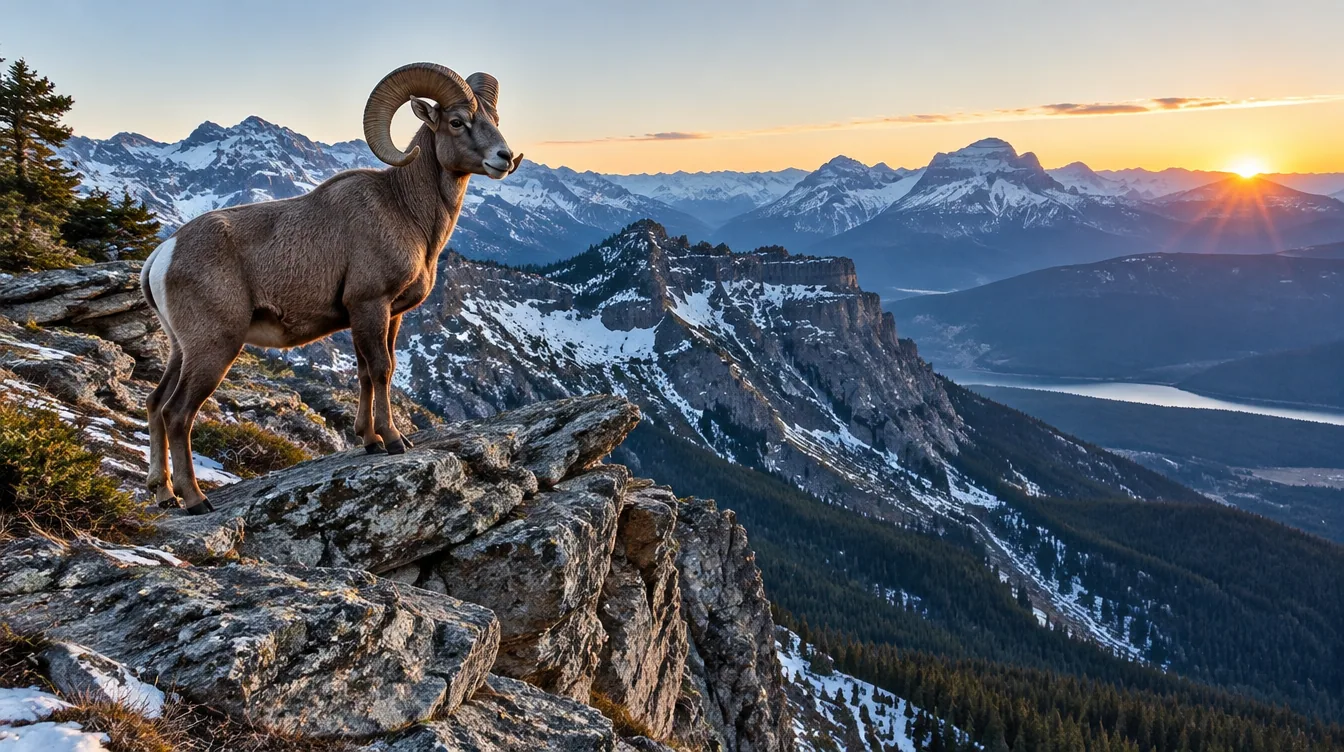
It is the first week of May, and two of the tags on the application in front of you carry odds that no honest person would call a plan. One is for a bighorn sheep. The other is for a mountain goat. You already know the numbers are terrible, and you are opening the page anyway, which says something about what these two animals do to a hunter's arithmetic.
Nobody who applies for a sheep or a goat tag expects to draw this spring. Most expect to wait years, or to never draw at all, and the published odds agree with them on every point. So the useful question is not whether you can beat a drawing that runs worse than a hundred to one. It is what you are actually buying when you apply, and what it costs you while you wait. It is also why the honest answer is not the same for the sheep as it is for the goat.
This is a guide to the two hardest tags in Montana. It covers how each drawing works, what the state actually publishes about the odds, and where the dream quietly takes something from you.
| Draw type | Draw only, for both species. There is no over-the-counter path to either one. |
| Deadline | May 1, 2026 — the same date moose, bighorn sheep, mountain goat, and bison share. The draw runs mid-May. |
| 2026 season | September 15 to November 29 for moose, sheep, and goat. |
| Nonresident permit | $1,250, covering moose, sheep, goat, or bison (FWP Nonresident Fees). |
| Bighorn sheep | Rocky Mountain herds plus the Missouri Breaks, where FWP names Region 6 and HD 482; quota districts include HDs 500–502 in Region 5. |
| Mountain goat | High western ranges; a successful applicant is ineligible for seven years. |
| Honest read | Marquee permits run worse than 100 to 1. Points tilt the math. They do not control it. |
The sheep: two licenses, one animal
Montana runs bighorn sheep through the draw in two separate forms. Confusing them is one of the fastest ways to spend years building points for a hunt you cannot take.
The limited license is the version most hunters mean when they say they are putting in for sheep. It is district-specific, and your first choice is your only choice. You pick one district, you commit to it for that application, and if you draw you hunt the sheep in that ground. That single decision is worth more thought than most applicants give it, because it is the only part of the sheep draw you genuinely control.
The unlimited license is the other door, and it is a different animal entirely. It is still a draw, but it is not the same competition, and it is not the same hunt. The unlimited units are the places where sheep country stops being a drawing on paper and becomes a mountain you have to physically climb. That distinction matters more than the draw odds do, and we will come back to it.
Where the sheep actually are is split into two broad settings. The first is the Rocky Mountain herds, the high and broken country most hunters picture when they hear the word bighorn. The second is the Missouri Breaks, and FWP names Region 6 and hunting district 482 when it points to that country. That is a landscape most out-of-state hunters have never considered for a sheep. It is also why a hunter who has only ever read about high-country rams is working with half a map. If you are new to that ground, start with our introduction to hunting the Missouri Breaks.
There is a third piece of the sheep picture that is easy to miss. Montana also issues sheep licenses in quota districts that include hunting districts 500 through 502, in Region 5. Because a district's number matches the region it belongs to, a 500-series district is South-central country, and that is a different hunt again from either the Rockies or the Breaks. Read the district, not the species name, before you decide where your single choice goes.
The goat: fewer hunters, higher country
Mountain goat runs on its own drawing, its own season, and its own penalty for winning.
The tag is draw only, and the country it lives in is the high western ranges of Montana. That means goat hunters are working steep ground above treeline, in the sort of terrain where the animal is better suited to the neighborhood than the hunter is. The West-central region around Missoula is part of that western mountain country. If you want to understand the ground a goat hunt actually happens on, start with the Region 2 West-central overview.
The penalty is the part of the goat draw that surprises people. A successful applicant is ineligible for seven years. You do not spend a goat tag and move on to the next one. You leave the drawing entirely for most of a decade, and if you want back in, you begin at zero points all over again. That single rule is the reason the goat should be thought of as a decade-long commitment rather than a springtime habit.
Moose, for context
Moose sits beside the sheep and the goat on the same application, and it carries the same structure. It is worth naming here even though it is not the subject of this page. Moose is draw only. It shares the May 1 deadline. And a successful applicant faces the same seven-year wait before applying again.
The moose numbers also give you a way to feel what the marquee permits actually look like. The West Garnet moose permit sits near 2%. That is one of the more favorable readings in the whole premium draw set, and it is still roughly a one-in-fifty proposition in any given year. Set that against a drawing that can run worse than 100 to 1 and you begin to see the shape of the problem.
The draw reality
The deadline for moose, bighorn sheep, mountain goat, and bison is May 1, 2026, and the drawing runs mid-May (FWP Applications & Drawing Dates). That is the whole window. There is no late season for the dream tags, and there is no second chance if you miss the date.
What you are entering is not a coin flip with long odds. It is a lottery where the head of the field runs to hundreds of applicants per permit. For many of the marquee lotteries, the odds of being drawn are greater than 100 to 1 (FWP Montana Outdoors, 2022).
The North Clark Fork bighorn drawing shows how much of your fate is decided by other people. It drew 1,234 applicants in 2020. The next year it drew 463. Nothing about the sheep changed between those two springs. What changed was how many other hunters looked at the same odds and decided not to bother, and that churn alone nearly tripled the odds of the people who stayed. Your chances moved further in one year because of the application pool than they would have in several years of point-building.
Hold that thought, because it reframes the entire exercise. You are not only competing against the drawing. You are competing against the decision every other hunter makes about whether to apply at all.
What you are actually buying: the squared point
None of this happens inside a preference system. Montana's premium draws run on bonus points, and the mechanic is the single most misunderstood thing in the state's licensing.
A bonus point is not a queue position and it is not seniority. It is an extra chance, and the chances are squared before the draw. FWP's own worked example makes the arithmetic plain: 10 points = (10 × 10) + 1 = 101 entries. The plus one is the base entry every applicant holds no matter what. Everything above it is your points, multiplied by themselves. You may acquire one bonus point per license year, per permit type, and points accumulate until you draw.
If you want the working detail behind that formula, it lives in our full explanation of Montana bonus points. If you only need the one-line definition before you go further, the short version is in the glossary entry on the bonus point. The distinction matters, because squaring turns patience into a curve rather than a straight line. The curve is steep enough that a decade of applying looks far stronger on paper than it feels in the field.
It still does not make you a favorite. It makes you a hunter with more tickets than the person who just started, in a barrel that is shaken anyway.
When you finally draw, the unit is the hunt
Here is the mistake that costs people the tag they waited a lifetime for: they spend all their energy on the drawing and none on the decision that follows it.
The unit choice is the whole hunt. A limited sheep license commits you to one district before you know whether you will draw it. The choice is made blind, years in advance, against conditions that will have changed by the time the tag arrives. The country you picked when you were twenty-eight is not the country you will hunt at thirty-nine. The hunter who treated that choice as a throwaway line on a form is the hunter who draws and then scrambles.
That is where the unlimited sheep units deserve a plain word. They are not a shortcut around bad odds. They are physically brutal country, walked into rather than driven to, in terrain that punishes anyone carrying more hope than fitness. An unlimited tag is a real opportunity and it is also a test of whether you actually want the hunt or only the tag. If your honest answer is that you want the animal without the mountain, the unlimited license is not for you. Knowing that in May is worth more than finding it out in September.
So build the point. Study the district while you build it. And decide, before you draw, which of the two sheep licenses you are truly applying for.
The honest picture
The odds are what they are, and no amount of planning changes them.
You can square your points, apply every single year, and still reach the end of your hunting life as a man who never held a sheep tag. That is not a failure of strategy. It is the arithmetic of a permit pool that is smaller than the number of people who want in, and the mountains do not care how much you wanted it. They were there before you applied and they will be there after you stop.
This is the part where an honest site has to disqualify something. Here it is plainly: do not build a life around a sheep tag. Build a point toward one if the dream is genuinely worth the wait, and then go hunt. A hunter who spends thirty springs waiting for a permit he may never draw has traded real seasons for a lottery ticket, and no tag is worth that trade.
There is a large amount of Montana hunting that does not require a stroke of luck at all. Roughly 80% of the state is open to general-tag hunting (FWP Montana Outdoors, 2022). Many pronghorn either-sex drawings and Elk B antlerless drawings run at double-digit success rates, which is ten times better or more than the marquee permits on a good year. And if elk is the animal you actually want to hunt this fall, the path is short. It takes the general season, a Montana elk tag you can apply for now, and a map. Our elk pillar lays out the whole picture.
The premium draws are not the only way to hunt Montana well. For most hunters they are not even the best way. The honest fork is simple. If the dream tag is the point, apply, accept the odds, and make peace with never drawing. If hunting is the point, the odds live somewhere else, and they are far better.
FAQ
How many bighorn sheep and mountain goat permits can I apply for in Montana? You apply through the draw, and the permit categories are separate, so a point in one does not help you in the other. For the limited sheep license, your district choice is your only choice. The deadline for moose, bighorn sheep, mountain goat, and bison is May 1, 2026, with the draw in mid-May.
Do I have to wait after drawing a mountain goat or moose permit? Yes. A successful applicant for either a mountain goat or a moose permit is ineligible for seven years. Sheep runs on its own license structure rather than the shared seven-year wait. That is one more reason to read the current regulations for the species you are applying for.
Why are the odds so much worse than other Montana draws? Because the number of animals is small and the number of applicants is large. FWP's own guidance is that the odds of being drawn for many of the marquee lotteries are greater than 100 to 1. The West Garnet moose permit sits near 2%, and the North Clark Fork bighorn drawing swung from 1,234 applicants in 2020 to 463 in 2021 on application behavior alone.
Do bonus points guarantee a premium tag? No. Bonus points add entries, and the entries are squared, so more points gives you materially better odds. Nothing in the system guarantees an outcome, and the premium permits stay long shots even at high point levels.
Is there a cheaper way to hunt the same country? For the ground itself, yes — that is what a general license and the public-land access system are for. But a general tag does not buy you a bighorn or a goat. Those two animals are draw-only in Montana, and no license other than the drawn permit will let you take one.
Where to go next
You now know the two hardest tags in the state, what they cost, and what they ask of you after you draw. The next step is arithmetic, and it is published.
The Draw Odds & Deadline Calendar puts every 2026 deadline and drawing date on one page, including the May 1 cutoff that moose, bighorn sheep, mountain goat, and bison all share. You will not lose a spring to a date you were guessing at.
The Nonresident Draw-Odds Calculator lets you run the squared mechanic against the drawings you actually care about. You can see what your current points are worth before you spend another year on them.
Apply for the sheep and the goat if the dream is worth the wait, and build the points with your eyes open. Hunt the general season if it is the season you want, because those odds are real and they are available this fall. Either way, stop guessing at the numbers. They are published, and now you can read them.