Montana Trout Fishing: The Blue-Ribbon Rivers, Honestly
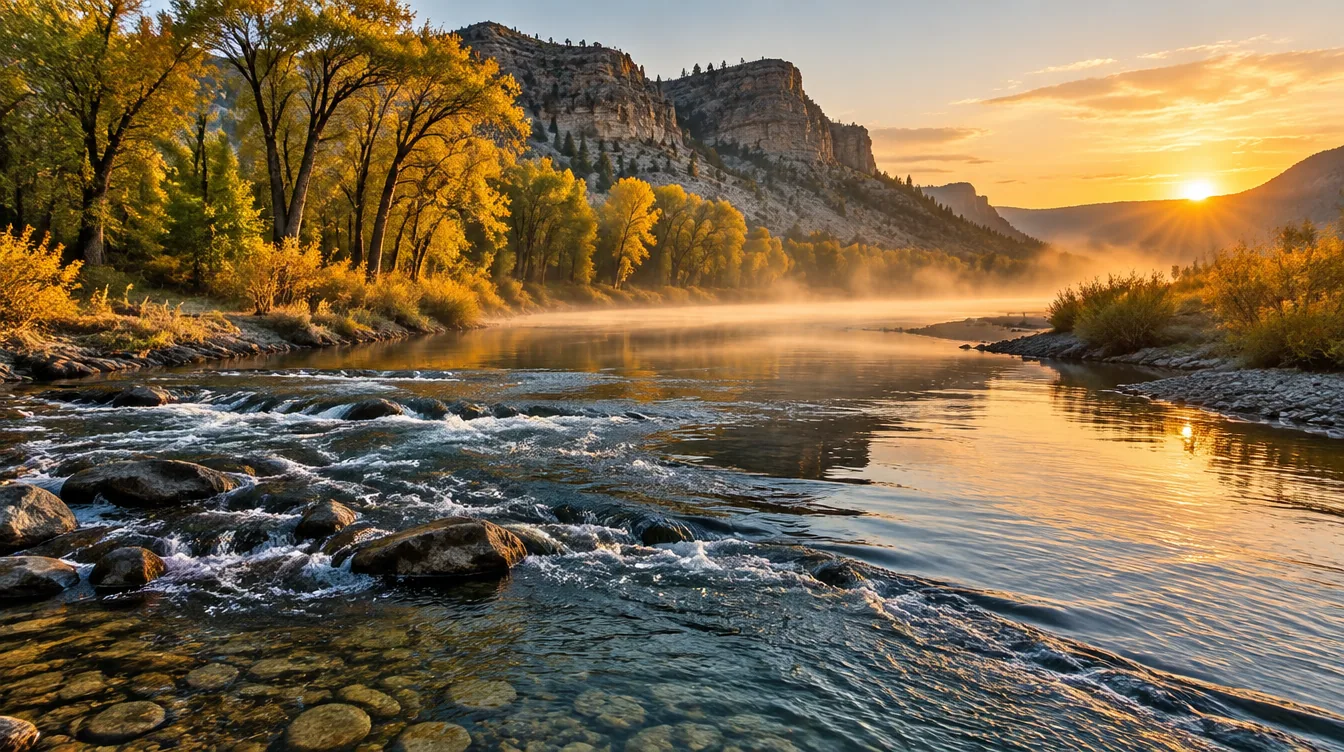
You have seen the photographs, and that is the problem. The Madison at dusk with a brown rising to a drift. The Bighorn running clear beneath a long sky, and a drift boat sliding around a bend with two anglers who look like they have done this a thousand times. Montana trout fishing carries a wall of fame, and the rivers on it have been photographed so well for so long that the pictures now read as a promise. Come here, the images say, and the water will be this good.
Then you arrive, and the pullout has eleven trucks in it.
That gap between the brochure and the bank is what this page is about. Not the version of the trip where you have a blue-ribbon river to yourself. The real one, where you decide in advance which water you actually want, what the trip will cost you, and how much company you are willing to share it with. Nobody sells you that last part. It is the part that decides whether the whole thing feels like a pilgrimage or a parking lot.
So here is the honest orientation. What Montana actually holds, which rivers carry the reputation, what swims in them, and where the reputation turns into a crowd.
The quick facts (Montana trout fishing)
Every figure below comes from FWP or its Montana Outdoors publication. Check each one against the current year before you build a season around it.
| Streams and rivers | roughly 28,000 miles statewide |
| Mountain lakes | more than 1,000 |
| FWP "blue-ribbon" rivers | Big Hole, Madison, Blackfoot, Bighorn, Yellowstone, upper Missouri |
| Known for big browns and rainbows | the Missouri near Craig |
| The headline tailwater | the Bighorn, below Yellowtail Dam |
| Coldwater species | rainbow, brown, brook, bull, westslope and Yellowstone cutthroat, lake trout, Arctic grayling |
| Warmwater species | walleye, sauger, channel catfish, smallmouth bass |
| Source | FWP Montana Outdoors, "Fishing Ops," 2020 |
That is the map at a glance. Everything below is the working detail, and most of it exists to keep you from spending a vacation on the wrong stretch of the right river.
What Montana actually has
Start with the scale, because it is the only reason a state this lightly populated can absorb the attention it gets. Montana holds roughly 28,000 miles of streams and rivers and more than 1,000 mountain lakes, according to FWP's own "Fishing Ops" (2020). Say that mileage slowly, because it is the fact that keeps the whole reputation honest. Twenty-eight thousand miles is more moving water than almost any angler will fish in ten lifetimes, and it does not all look alike.
The pressure you have heard about is real, but it is not spread across all 28,000 miles. It collects on the rivers with the biggest names, in the months with the best weather, at the easiest access points to find. When somebody tells you Montana is fished out, they are usually describing one river in one month, then generalizing from a single afternoon. The difference between a frustrating trip and a good one is almost never the state. It is the specific water you chose, and the week you chose to stand in it.
Montana also divides its own fishing in a way worth knowing before you commit to a plan. The state runs seven FWP administrative regions, and the water inside them is not interchangeable. The famous coldwater rivers sit mostly in the west and south, where the drainages run cold and fast out of the mountains. The warmwater fisheries sit lower and spread across the map — Fort Peck out east, Canyon Ferry near Helena, and the north-central lakes at Nelson, Holter, and Tiber — in country that looks nothing like a trout postcard. Which half of that you want decides where you point the truck, and it decides what kind of trip you are actually planning.
The blue-ribbon rivers, named
FWP promotes a short list of rivers under the "blue-ribbon" banner, and the list is brief enough to memorize. It runs the Big Hole, the Madison, the Blackfoot, the Bighorn, the Yellowstone, and the upper Missouri. Add the Missouri near Craig, which FWP names for its big browns and rainbows. That is the water most out-of-state anglers are imagining when they say they want to fish Montana.
That label is worth understanding for what it is, and what it is not. Blue-ribbon is a recognition of reputation, not a private guarantee. It tells you a river has been famous long enough to earn the name, and it tells you that the fame has a cost. The rivers on that list carry the most guide traffic, the fullest pullouts, and the shortest distance between one angler and the next. That is the trade the label makes on your behalf: you get water worth fishing, and you get everyone else who read the same list.
The same river can also mean two different things, depending on where you are standing on it. The Missouri proves the point better than any other water in the state. The upper Missouri is blue-ribbon trout water, the stretch the list is talking about. Follow the same river far enough downstream and you reach the Missouri Breaks, a wild, broken canyon country that is a destination for an entirely different reason. One river, two Montanas — and the name on the map is only the beginning of the question.
The Bighorn River, up close
If one river carries Montana's trout reputation hardest, it is the Bighorn, a south-central Montana tailwater below Yellowtail Dam. It belongs on the short list of the most famous trout fisheries in the country, and on a shorter list of the most pressured ones in the state. Those two facts are not in tension. They are the same fact.
Here is what the reputation buys, and what it costs. A tailwater below a dam tends to run clear and steady, which is exactly why the fish grow well and the river fishes well. It is also exactly why the word gets out. You are not discovering a secret; you are joining a crowd that found out decades ago. The crowd is the reason a river can be both the best water you fish all year and the busiest.
The practical consequence is simple, and it shapes your whole trip. On a river like the Bighorn, your day is planned around other people as much as around fish. The float has its own choreography, the boat ramps fill early, and the wading angler and the drifting angler negotiate the same runs. None of that ruins the fishing; it means the river rewards manners, timing, and a willingness to walk farther than the next truck. If you want the Bighorn at its best, you are signing up for its first-light version. That is the one that shows up while everyone else is still at the coffee pot.
The Bighorn is worth understanding through the country it drains, and the south-central region is the place to start. It is not just water, either. It is a whole landscape of river valleys and prairie, and the fishing is one part of what that country offers.
The species: what is actually in the water
Montana's coldwater list is longer than most visiting anglers expect. The names matter less for what they look like than for what they let you plan.
The everyday fish are the rainbow and the brown, the two species that carry most trout fishing in the state and most of the photographs you have seen. Around them sit the brook trout, a smaller, prettier fish that holds in the cooler water. Then the bull trout, the big native char that occupies its own special place in the state's coldwater picture. The cutthroat show up in two distinct Montana forms, the westslope and the Yellowstone. Knowing which one lives where is the difference between fishing the right water and watching other people catch what you came for.
Beyond those come the specialists. Lake trout belong to the deep, cold lakes rather than the rivers, and they fish like a completely different pursuit. The Arctic grayling is a fish of particular Montana waters, a species you target as a destination rather than by accident. A small number of high-country waters hold golden trout, limited enough that you should treat them as a specialist's objective rather than something you stumble into. FWP lists all of these among the state's coldwater species, and none of them is a rumor.
What that diversity gives you is options. A trip that turns out to be wrong for one fish is often right for another, so the angler who knows the full list can salvage a day a single-species plan would have wasted.
A word on warmwater: Montana is not only trout
This is the part of the state that gets left out of the postcards, and the part that makes Montana more interesting than its reputation.
Montana holds real warmwater fishing, and it is not a consolation prize. Walleye are the anchor of it, and FWP names five reservoirs where they matter: Fort Peck, Canyon Ferry, Nelson, Holter, and Tiber. Those are big, open waters that fish on a different rhythm than a mountain river. They reward an angler who plans for depth, wind, and open water instead of a drift and a mend.
Alongside the walleye you find sauger, a close cousin that runs with them, and channel catfish, which give the eastern reservoirs a summer fishery all their own. Smallmouth bass fill two more corners of the map, at Noxon and on the lower Yellowstone. They fight in a way that makes a light-rod angler forget the trout he came for. None of this replaces the coldwater fishing the state is famous for. It means you can build a trip around something other than a river, in country where the crowd you were worried about never shows up.
That warmwater map also sits on top of some of the state's best hunting country. That is not a coincidence, and it is not a small thing if your fall plans involve more than a fly rod. The same eastern reservoirs and river breaks that hold fish hold game, so a trip that mixes the two is one of the better-kept advantages of a Montana autumn.
The honest picture
Now the part most pages skip, because the Ally's job is to tell you where the reputation will cost you more than it pays.
The famous rivers are the crowded rivers, and that is not a fixable problem. The Big Hole, the Madison, the Blackfoot, the Bighorn, the Yellowstone, and the upper Missouri are on FWP's blue-ribbon list precisely because everyone already knows their names. Planning a trip around the most famous water in July and expecting solitude is not optimism; it is a miscalculation, and the river will not correct it for you.
Understand what the drift and the etiquette actually ask of you. On the busiest water, the day is shared, and sharing has rules. The boat angler and the wading angler are using the same water at the same time. The angler who ignores the order of things spends the afternoon wondering why nobody is friendly. Learn the courtesy before you learn the cast, because on a crowded river the courtesy is the thing that gets you invited back.
Local pressure is the quiet tax on a famous address. The rivers that draw the most visitors also carry the most community investment, the most guide traffic, and the most opinions about how the water should be fished. That is the price of the reputation, and everyone who comes pays it, locals first and visitors right behind them. Knowing that in advance is what keeps it from feeling like a personal insult.
Watch the money if you are coming from out of state. A nonresident trip is not just gas and a motel, and Montana's nonresident Combination hunting license includes a season fishing license. That is worth understanding before you buy fishing on top of it, because the two sides of the state's licensing deserve one honest look together. Our breakdown of nonresident license costs lays the numbers out line by line, and it is the fastest way to see what your trip really costs before you commit.
And a note on what we will not tell you. We are not going to hand you a river that is secretly uncrowded, because that is not how a famous fishery works. What we will do is tell you the truth about the trade. The best water is the busiest water, and the trip that suits you is the one that matches the company you are willing to keep. Choose your water for the crowd you can live with, and the fishing takes care of itself.
Montana trout fishing: questions people ask
Is Montana good for trout fishing? It is one of the best trout states in the country, and the numbers back the reputation. Montana holds roughly 28,000 miles of streams and rivers and more than 1,000 mountain lakes, according to FWP's "Fishing Ops" (2020). FWP also maintains a formal list of blue-ribbon rivers that includes the Big Hole, the Madison, the Blackfoot, the Bighorn, the Yellowstone, and the upper Missouri.
Where is the best trout fishing in Montana? FWP's blue-ribbon list is the honest starting point: the Big Hole, Madison, Blackfoot, Bighorn, Yellowstone, and upper Missouri. The Missouri near Craig is called out for its big browns and rainbows. The Bighorn, below Yellowtail Dam, carries some of the heaviest reputation and the heaviest pressure in the state. Best and busiest tend to be the same rivers, so plan for the company.
What fish can you catch in Montana? The coldwater list runs rainbow, brown, brook, bull, westslope and Yellowstone cutthroat, lake trout, and Arctic grayling, with a limited number of golden trout in high country. FWP also documents warmwater fish: walleye in Fort Peck, Canyon Ferry, Nelson, Holter, and Tiber, along with sauger, channel catfish, and smallmouth bass at Noxon and on the lower Yellowstone.
Do I need a license to fish in Montana? Yes, because Montana requires a fishing license, and a nonresident who holds the state's Combination hunting license should know that a season fishing license is already part of that package. For current standalone fishing license fees and the year's rules, check FWP directly rather than a number you read on a forum.
Is the Bighorn River crowded? It is one of the most pressured trout fisheries in the state, and that pressure is the direct result of how famous the river is. It is a south-central Montana tailwater below Yellowtail Dam, and it draws anglers from across the country. You can still have a good day on it, but plan around other people instead of expecting to escape them.
Where to go next
The water is real, and so is the crowd, which means the trip you want is a trip you plan rather than a trip you stumble into. The angler who picks the right stretch and the right week will out-fish the one who simply drove to the most famous name on the map.
If your fall is really about a tag instead of a fly, the same discipline carries over, and the fishing is often what fills the slow days around it. Start with our Montana elk hunting guide if the seasons are what you are actually planning, and let the trout be the thing you do between them.
Get the Draw Odds & Deadline Calendar — every nonresident deadline, every fee, and the dates that decide your fall, kept current against FWP's own published schedule.
Pick your water for the crowd you can live with. Fish it well. Come back for the season that matters.